Jeff Landry’s skepticism of climate change threatens Louisiana’s future
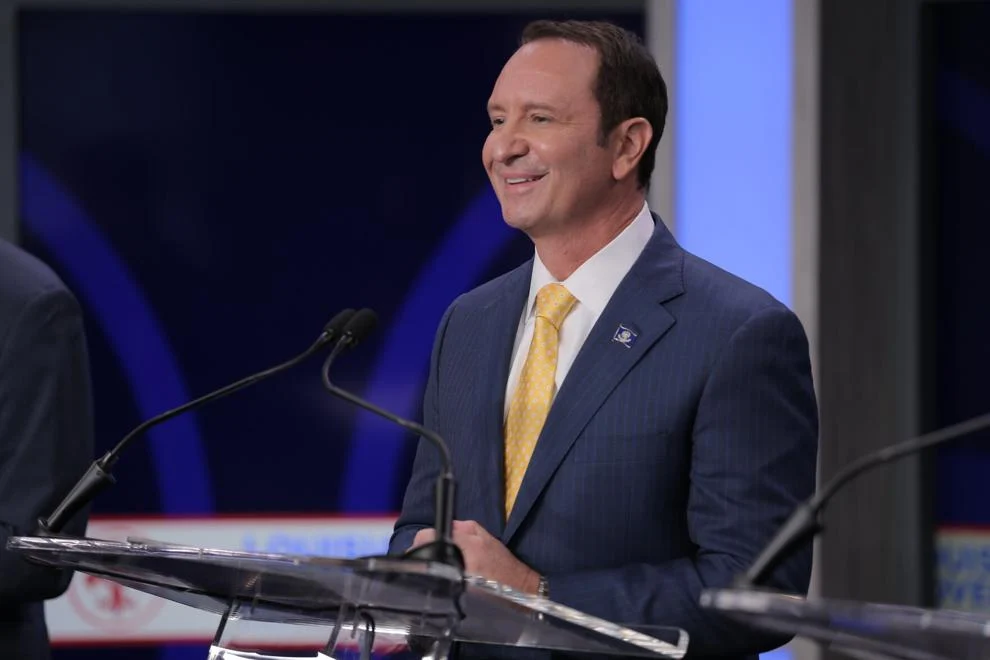
Because he is leading the race for governor, Attorney General Jeff Landry is now a clear and present danger to a sustainable future for Louisiana in the age of climate change.
He said so himself with this recent comment about the greatest threat ever to the very habitability of its bottom third.
“This idea that it (climate change) is solely humans causing variations, to me, is not grounded in actual evidence,” Landry told this newspaper in August.
Those words should be very scary to homeowners looking at their new insurance rates. Or business owners and young people deciding if they should stay here.
That’s because scientists have concluded that increasing climate impacts — rising seas, larger hurricanes, record rainfalls, more forest fires — give Louisiana one of the riskiest futures in North America.
The rest of the GOP field is also trying to protect oil and gas, but at least don’t deny the reality of climate change.
Here’s a brief explanation for Landry and others who think they know more than the climate experts and insurance CEOs:
Emissions from fossil fuels have been warming the atmosphere for 150 years. That heat is causing water stored as ice in glaciers and on Greenland and Antarctica to melt. At the same time the oceans absorbed 90% of the heat causing thermal expansion. That combination is making seas rise at record rates.
Worse for us, the Gulf of Mexico is warming twice as fast as the rest of the oceans. It’s one reason why scientists say by 2050 the Gulf could rise two feet along the Louisiana coast,
Finally, because hurricanes grow quickly over warmer water, they now routinely jump from Category 1 to 4 and 5 in just 24 to 28 hours.
This is terrible news for Louisiana because its coastal zone is sinking at one of the fastest rates of any large landscape on the planet.
It’s why communities from Mandeville to Lake Charles can see levee-topping surge from even smaller storms — not to mention the 150-mph winds from larger storms that levees can’t stop.
And it’s why insurance companies have either left the state or raised rates to unaffordable levels. Climate change has made this state a very bad bet.
The only way to slow the increase of those impacts is for the world to quickly reduce emissions dramatically. Indeed the “best-case” scenario in the state’s $50 billion plan for coastal survival depends on that.
And the only way to achieve that is the rapid reduction in the use of fossil fuels, especially oil and gas.
But Landry wants no part of that.
So he claims he knows more about the climate than scientists and insurance executives.
He has frequently called climate change a “hoax” and uses this deniers’ standard dodge: The planet has always had natural hot and cold cycles.
That ignores the obvious: Yes, Earth still goes through those natural cycles — but there is nothing natural about the added impact of the emissions humans have been pouring into the air for 150 years.
Why does Landry keep denying?
The oil industry.
“I grew up just appreciating and loving the oil and gas industry,” Landry once told an energy conference.
That passion still runs hot.
He has been an owner of an industry company.
As a congressman, he opposed any restrictions on drilling anywhere.
As AG he used our tax dollars to fight for the industry.
He filed suit against the Biden administration’s decision to use climate impacts in determining regulations.
He joined GOP attorneys general in a case now before the U.S. Supreme Court that would severely limit the Environmental Protection Agency’s ability to enforce almost any regulation — something the oil industry has been seeking for years.
He joined the American Petroleum Institute — the industry’s largest lobbying arm — suing the planned federal offshore oil and gas lease sale, claiming it was too small.
And in 2021 he belatedly reported he had been paid $50,000 to $100,000 a year sitting the board of an oil industry company owned by his friend and booster Shane Guidry.
Does anyone think that, as governor, Landry will choose the future of Louisiana over that of the oil industry?
He’s a clear and present danger.
Bob Marshall, a Pulitzer Prize-winning Louisiana environmental journalist, can be reached at bmarshallenviro@gmail.com. He is on X, formerly Twitter, @BMarshallEnviro.