We’ll Never Reduce Emissions if We Won’t Even Talk About It
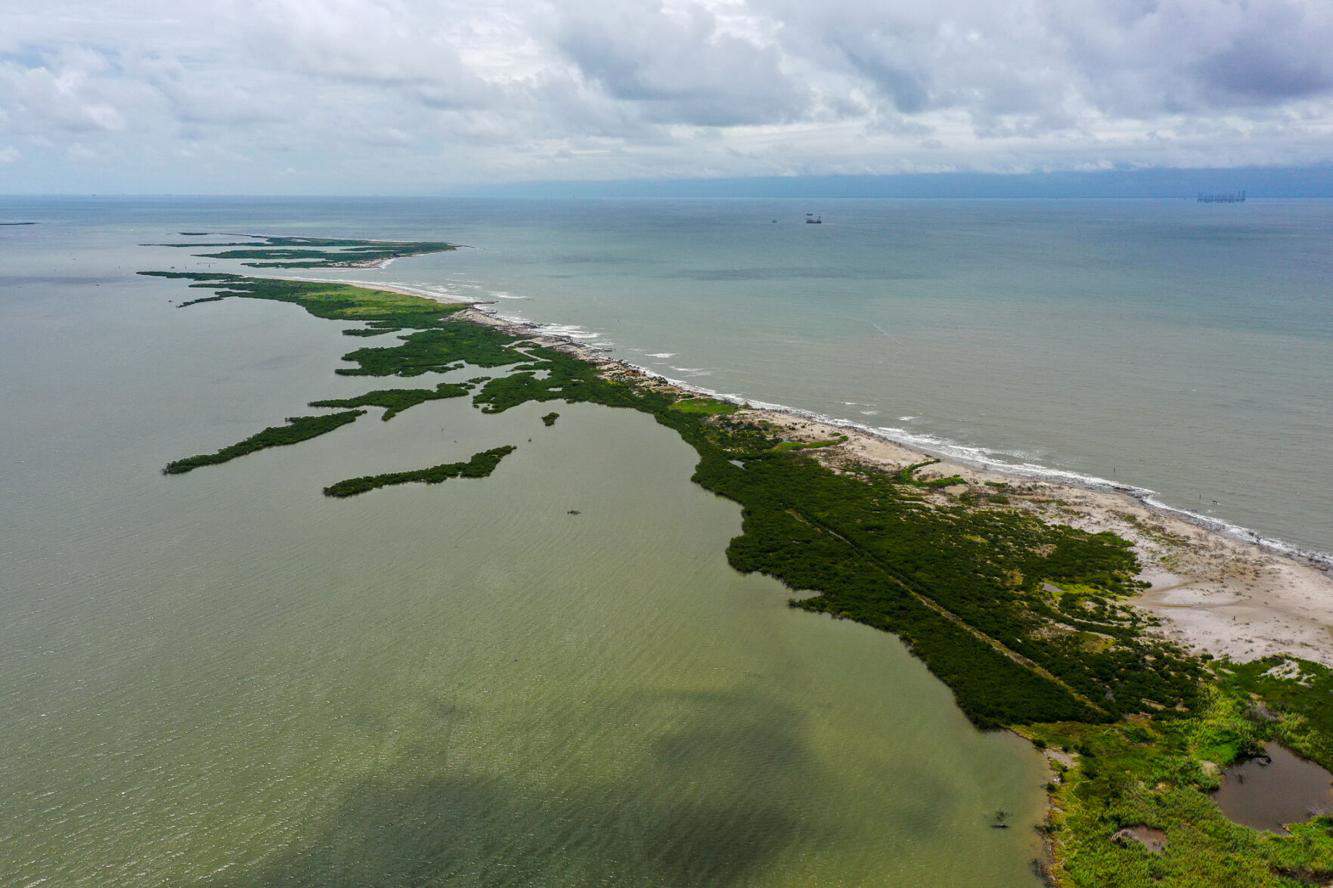
Timbalier Island in Terrebonne Basin was recently restored along with two other barrier islands. (CPRA photo)
How can a brilliant work of engineering and science signal a moment of pride and hope for a state, but also include dire warnings and be missing an essential message?
That’s my first reaction to the draft edition of the 2023 Louisiana Coastal Master Plan for a Sustainable Coast, released last week.
Teams of world-class scientists and engineers from Louisiana and across the world have produced what is arguably the most advanced science-based coastal resilience strategy in this age of climate change.
It is filled with projects such as new levees, floodwalls and wetlands restoration to reduce the growing risks of higher storm surge reaching further inland from ever-growing hurricanes. It lays out plans for removing willing residents outside those protections and helping others to “flood-proof” their homes and businesses. It has interactive online programs that can tell residents what risks they face, what roads might be flooded and how much damage their individual communities could suffer.
It estimates the billions in savings these projects offer from what is expected to be more billions in annual losses going forward every year.
So where are the dire warnings?
Well, the fact that we now need an announced $50 billion effort ($92 billion when inflation is added) to make the landscape we live on “sustainable” is itself a pretty clear warning.
Indeed, the Coastal Protection and Restoration Authority repeatedly states that climate change ensures “Louisiana’s landscape is going to look different 50 years into the future.”
And there is this: It’s just a 50-year plan. It makes no promises beyond 2070.
In fact, it reports “the benefits of many of the early projects diminish in the final decade as they can no longer keep pace with subsidence and accelerated rates of sea level rise.” It finds that even if the projects work perfectly, we would likely still lose another 767 to 2772 square miles just by 2070.
Which leads me to the missed essential message.
The CPRA has chosen not to mention the main determining factor for the efficacy of its projects and any sustainable future here: The need for the nation and world to dramatically reduce greenhouse gas emissions over the next 10 to 20 years.
Here’s why.
Read the rest of the article at The Times-Picayune.