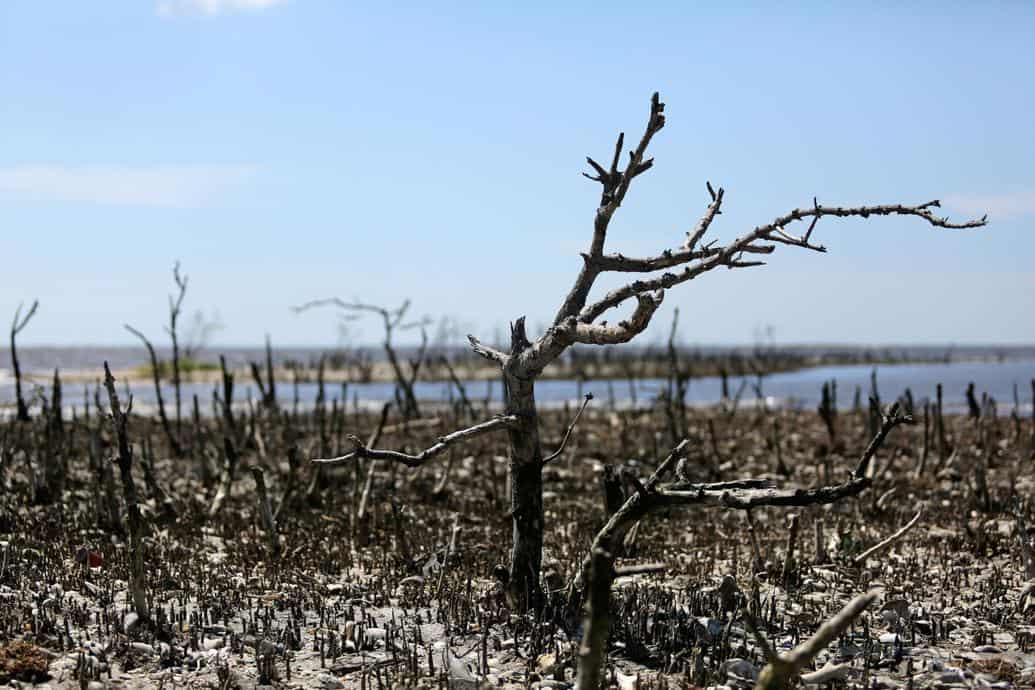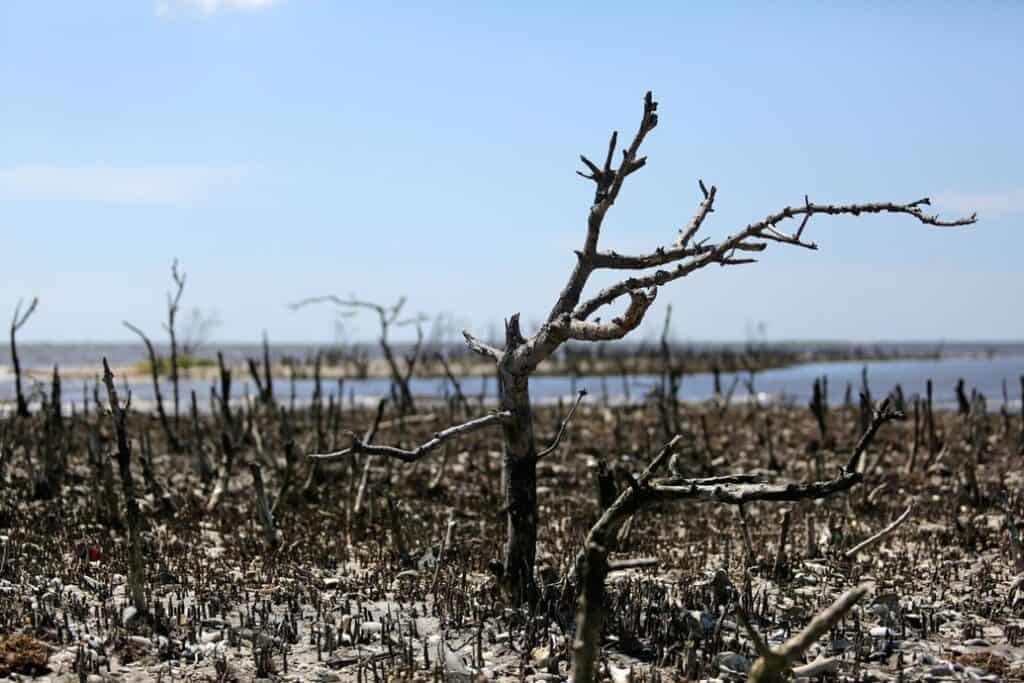
The bones of black mangrove trees and stumps stand stark on Cat Island on Thursday, April 10, 2014. (Photo by Julia Kumari Drapkin, Nola.com | The Times-Picayune)
Do Louisianans think the way schools teach the nation’s history with slavery is the reason soaring flood insurance rates might soon make home ownership impossible in some communities?
Do they believe that teachers mentioning gay couples is why Lake Charles, Houma, Lafitte, and other cities are facing ruinous soaring rebuilding costs from ever-larger hurricanes?
Have they concluded preventing transgender people from using bathrooms of their choice is a key to stopping storm surges from reaching ever further north of our coast, or removing Louisiana from the list of most polluted and unhealthy states?
I ask those questions because it used to be reasonable to assume the attention given a political issue would reflect its importance to the well-being and future the community.
Unfortunately, in this case the old rule about “assume” (making an ASS out of U and Me) has caught me again.
For while Louisiana’s political leaders and the newsrooms that respond to the public’s interests spent much of the last year on so-called culture wars, the real enemies of our future have been gaining ground — literally.
So, it’s likely many Louisianans missed a series of
recent reports, critical to any future we might have here, issued by the Intergovernmental Panel on Climate Change, made up of the smartest people in the world on climate. The last report, released two weeks ago, said the world has about eight years to reduce greenhouse gas emissions by 50% or face making the impacts already being felt more severe and lasting. Those include record wildfires, heat waves, droughts, flooding rainfalls, larger hurricanes, sea level rise and more.
This should have been the hottest topic at our Legislature and our media. After all, Louisiana is one of the most vulnerable spots on the planet to climate change because our coastal zone — basically an area from Lake Charles to Mandeville — is sinking at one of the fastest rates in the world. When combined with ocean swelling caused by warming, researchers say the Gulf is likely to rise by two feet along the Louisiana cost by 2050 — just 38 years away.
That will result in every storm surge being higher and reaching further inland. And that means many current levees would have to be raised at tremendous expense, or communities would have to move. Ask residents of LaPlace, Lake Charles, Lafitte, and Mandeville if they’ve noticed any changes and if they think that is needed.
And if Gulf water temperatures, which feed hurricane development, continue rising to record highs, hurricane will continue the recent trend of from jumping from meager Cat 1s to raging Cat 4s in just 24 hours. Higher levees can repel higher surge but won’t stop 150 mph winds from devastating communities.
That latest IPCC report listed the
changes that can make a difference, that could slow and reduce these impacts and make it possible for future generations to continue to live in Louisiana’s bottom third.
Yet most of our lawmakers, like their voters, paid little attention.