There Are Ordinary People, and Then There Are Corporate People
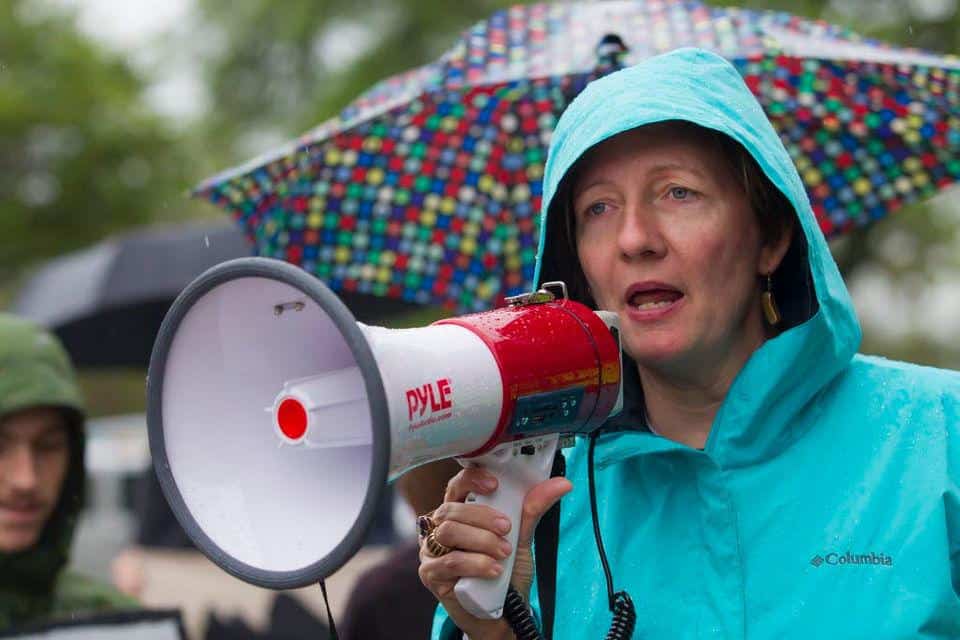
Anne Rolfes of the Louisiana Bucket Brigade. Photo by Chris Granger
In 2012, Mitt Romney, the GOP presidential nominee, made headlines by proclaiming “Corporations are people.” Most Americans found that idea preposterous. After all, our Constitution never mentions “corporate people.” And we’re taught from the cradle that Abraham Lincoln was correct is saying we have a government “of the people by the people and for the people.” He never mentioned “corporate people.”
But Mitt was right, at least in the eyes of the law.
Pro-business lawmakers long ago decided corporations were entitled to many of the same rights as human citizens — and in some areas more rights and fewer responsibilities than us human citizens. And the U.S. Supreme Court has backed them up.
Indeed, it’s easy to see there are now two levels of citizenship in this country. The top level is for corporations and those who run them. The lower level is for human citizens.
This is especially evident in the area of environmental regulations.
When corporate citizens violate environmental laws the most they have to fear is a financial penalty — even if their crimes result in human injuries or deaths. After payment, the corporation’s life goes on and its dependents — the shareholders — continue to profit. The human people running those corporations seldom face any punishment either.
But members of that lower class of citizenship — people — face a much harsher justice for environmental crimes. If a human citizen dumps poisons into the environment, on another citizen or, worse, a business they can be hit with fines, arrest and imprisonment. And once behind bars, every aspect of their lives comes to a halt. In addition to loss of freedom, they can be banished from careers, lose property, voting rights, savings — even a lifetime loss of gun rights. And their stockholders — their families — will also suffer as their income is reduced or eliminated.
All this comes to mind with the arrest last month in Baton Rouge of Anne Rolfes and Kate McIntosh, environmental activists with the New Orleans-based Louisiana Bucket Brigade. They were fingerprinted, slapped in handcuffs, hobbled with ankle restraints, placed in a police van under armed guard and hauled off to jail.
Their crime: terrorism.