The More Children Learn About Coastal Loss, the Better | The Times-Picayune
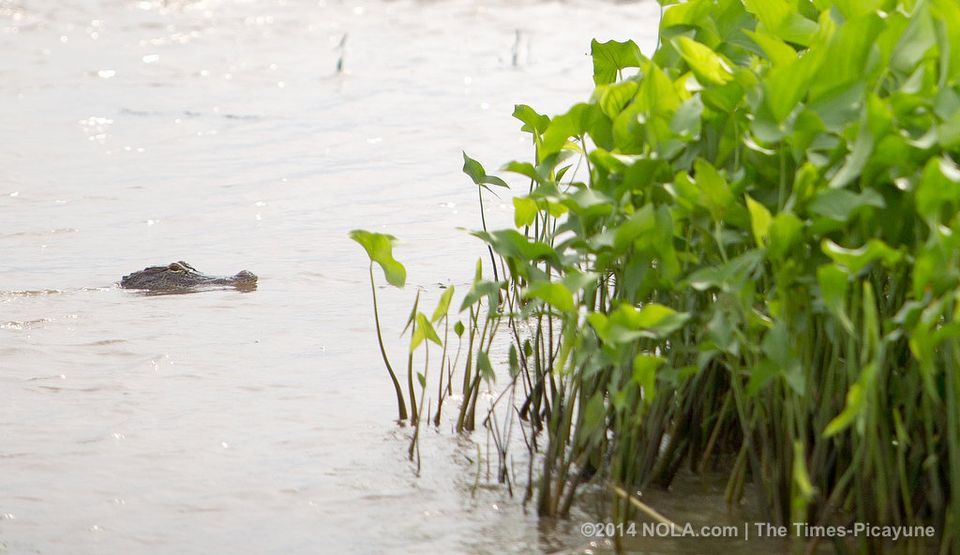
An alligator swims along an island in the Wax Lake Delta in St. Mary Parish Tuesday, July 29, 2014. (Photo by Brett Duke, Nola.com | The Times-Picayune)
And now, some good news — really.
I can understand your skepticism. This column is dedicated to offering insight and opinion about our coastal crisis informed by almost 40 years of covering the issues. And for the past year or so the news has not been very good. Sea level rise estimates keep being ratcheted up as emissions continue to grow; we have a GOP congressional delegation and president who are doing their best to make that even worse — and the state still can’t find a permanent funding source for it’s do-or-die Coastal Master Plan.
But just when you think the news could never turn brighter – it provides two surprises.
The first: The Trump administration has agreed to fast-track the permitting process for the Myrtle Grove diversion, cutting the expected five-year process to two years.
For a state still losing 16 square miles of its coast every year, this is very big news. I’m encouraged, but a little wary. They claim this won’t mean skipping any of the legally required checks to make sure the project won’t make things worse for the long list of species — and people — impacted by the project. But this comes at a time when the same administration is cutting budgets at many of the agencies the law requires to do these checks.
We’ll see.
The second piece of good news: John White, the state superintendent of education, is all in favor of finding a way to make Louisiana-specific environmental education mandatory for K-12.
White expressed that desire in a follow-up call to my last column urging just such a program. It is my belief, shared by many others, that the state is neglecting to properly prepare our children for the future without educating them on what we have done to this landscape and the serious risks we now face because of those actions.
That education should be honest about the causes of the crisis, as well as how the state is trying to meet its challenges. It also would begin to prepare them for jobs in the recovery and adaptation industries that are already growing here — the so-called “water economy.”
There are many excellent individual efforts by teachers already under way. There are elective programs in some schools on the crisis and wetlands ecology. And a high school whose curriculum will be centered on the coast — New Harmony High — will open in the fall.
But that still leaves out the overwhelming majority of students.
So, the key to making sure each student receives the education they deserve is to have those lessons part of the state-required curriculum and reflected in the achievement tests students must pass. If that is done, the lessons become mandatory.
Read the rest of the article at The Times-Picayune.