What is Louisiana really getting for its love of oil and gas?
What if I told you that most of your politicians in Baton Rouge and Washington are supporting measures that increase the odds your children will contract terrible diseases just to protect a business sector that ranks only 15th in state employment?
And what if I told you that fading sector was oil, gas and petrochemicals?
I know what you would be thinking. I thought the same thing when I first saw those facts.
After all, for 50 years, Louisiana politicians have been claiming those industries are so important to the state’s economy that voters (and reporters) should excuse the growing scientific evidence of their major role in destroying our coastal ecosystems and making this state one of the most polluted in the nation.
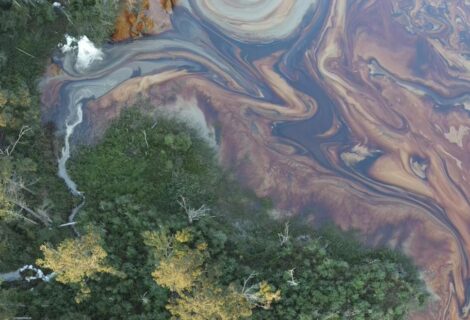
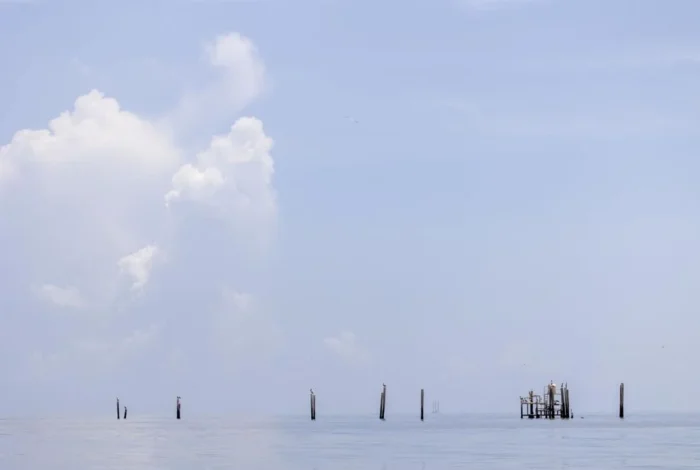
To be fair, as I roamed our wetlands for work and pleasure, evidence of the industry’s claims was impossible to miss. They were drilling in wildlife management areas, dredging canals across waterfowl habitat and oyster grounds and raising employee dormitories over speckled trout, redfish and shrimp marshes.
For decades, revenue from oil and gas production inside Louisiana accounted for as much as 60% of the state’s income. Our license plates claimed we were the “Sportsman’s Paradise,” but they could just as easily have shouted “Visit Oilyana!”
But as the rigs on state lands began to play out, the industry moved offshore into federal waters and that income began to drop, then plunge. So did its employee rolls.
The extent of that fall is clearly outlined in a report from the Research Lab at the nonprofit American Public Media titled “Recent History Suggests That ‘Drill Baby Drill’ is unlikely to spark economic revival in Louisiana.”
Two of its key findings:
- The percentage of the state’s total income from oil and gas has dropped from 60% in the 1960s to just 4.5%.
- And while those sectors made up one-third of Louisiana’s economy as late as 1999, they now create less than one-seventh.
Further data from a 2023 Louisiana Workforce Commission report shows the mining sector — which includes oil, gas and petrochemical — ranks only 15th in employment with just under 28,000 employees. That’s dwarfed by the almost 300,000 working in the state-leading health care and social assistance sector.
Yet despite those unimpressive numbers, Louisiana politicians — including almost every Republican — continue to treat the sector like the economic powerhouse it once was while simultaneously holding back development of clean energy such as solar and wind.
This would be bad enough if the favored treatment meant only unjustified tax breaks. But it has risen to political malpractice, as those politicians support two of President Donald Trump’s biggest initiatives:
- The largest rollback of environmental regulations in history on oil, gas and petrochemical producers, which the medical community says will result in higher rates of deadly diseases and shorter life spans.
- An all-out war on clean energy, killing federal support programs and even suing state governments for their programs.
As with many government cost-benefit losers, just follow the money to uncover the reason.
While the oil, gas and petrochemical sector ranks a distant 15th in total employees, it climbs to third in hourly wages at $32.28.
Meanwhile, the industries employing the largest share of our working class — some 700,000 folks — pay some of the lowest hourly wages, according to state records.
For instance, the retail and accommodation-food service sectors, the second- and third-largest employers representing almost 400,000 workers, pay $11.65 to $15.54 per hour respectively.
In a nation where money is considered protected political speech, it’s obvious which industries have the employees with the free time and money to speak the loudest and most often to politicians making the rules.
But it would be nice if — just once — they voted for our children’s health rather than the profits of a shrinking industry.
Bob Marshall, a Pulitzer Prize-winning Louisiana environmental journalist, can be reached at bmarshallenviro@gmail.com, and followed on Twitter @BMarshallEnviro.