Climate Scientists Told Us This Would Happen
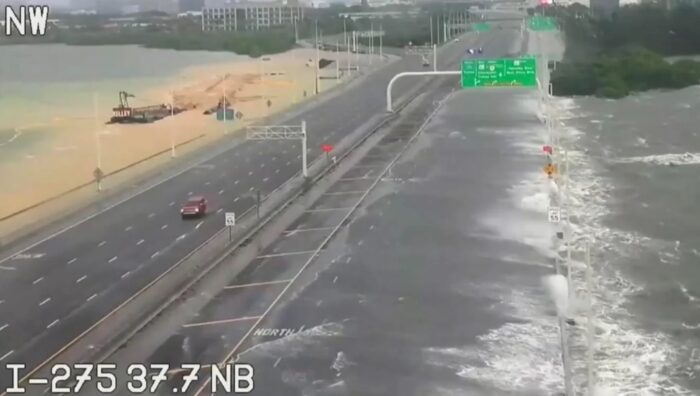
Flooded interstate 275 Over Tampa Bay, Fla., on Wednesday, Aug. 30, 2023. (FDOT via AP)
No big whoop, right? Three millimeters is about the width of a penny. And what AC unit can’t make that one-degree uptick in heat disappear?
So, you probably agreed with the fossil fuel industry and some politicians when they shouted scientists down and even ridiculed their findings.
“Why so much alarm about tiny changes!” they yelled. “We’re not going to disrupt our lives (and our profits) unless something B-I-G is going to happen, and happen soon!”
But with all their noise you probably didn’t hear the other part of scientists’ warnings: They were not talking about immediate impacts of individual small changes, but the cumulative harm they would cause over time.
Those small changes, they explained, were like compound interest in a hot new investment. Each tiny uptick in sea level and temperature would be added to the total from previous increases. It wasn’t as simple as 85 degrees plus one equals 86 degrees, period. It was then 86 plus one makes 87, then 87 plus one brings us to 88, and so on, ever more rapidly as the climate climbs an unending staircase toward terrible harm to our lives.
And the worst news those climatologists were trying to explain you may still not have heard: Those increases will likely be permanent because of the heat baked into the system by unchecked human-produced emissions for 150 years.
There is no known way to quickly roll back those tiny changes. The only thing we can do now is reduce the rate of increases in the decades ahead by quickly transitioning off most of our fossil fuel use. Otherwise, the deadly and costly impacts we are now suffering will continue in frequency and intensity.
This summer Louisiana and the rest of the planet have been getting a taste of that permanent future.
Read the rest of the article at The Times-Picayune.