More Bad News on Climate Change. Is Anyone Listening?
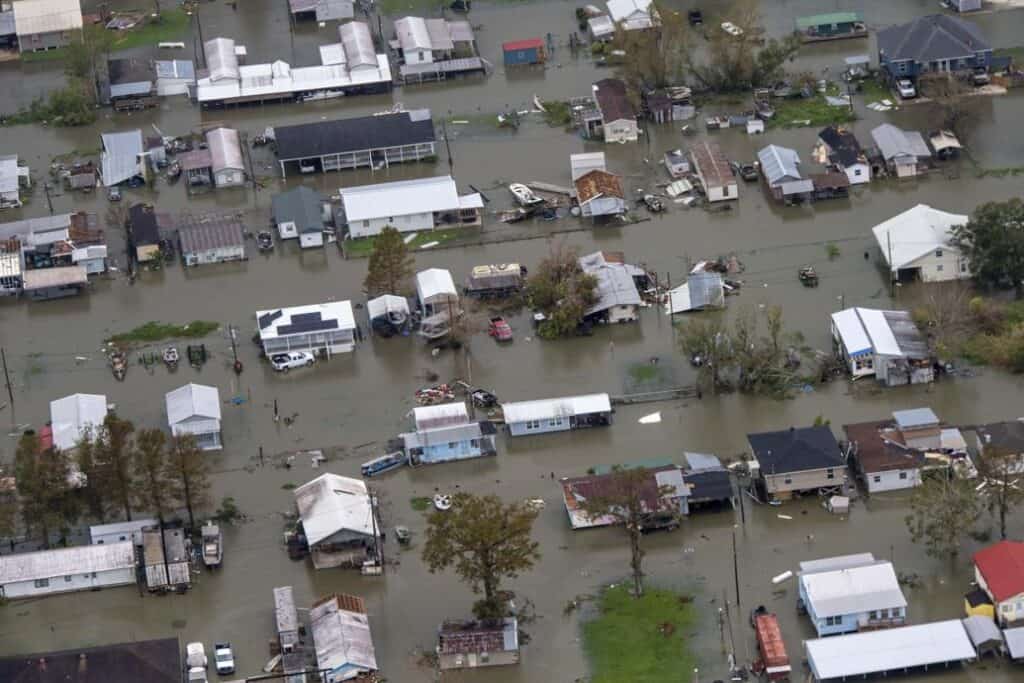
Wind and water damage from Hurricane Ida is seen in Chackbay on August 31, 2021. (NOLA staff photo by Bill Feig)
Last month New Orleans crossed a historic benchmark. The Big Easy was given a new, more accurate nickname.
Welcome to life in “The Big Risky.”
That’s the verdict from the latest report by the Intergovernmental Panel on Climate Change, the collection of the world’s greatest climate scientists charged with explaining future living conditions on the planet as rising greenhouse gas emissions disrupt the natural systems our cultures, lifestyles and economies were built upon.
Their new vision for the city and region if emissions are not tamed was beyond grim. The headline on the report in this newspaper was unambiguous: “Climate change poses existential threat to south Louisiana: U.N. report.”
“Existential” — as in a mortal threat.
The risks justifying that warning were distilled from the report by my colleague Mark Schleifstein. They should be mandatory reading for your elected officials because they will decide if we take the actions necessary to make a liveable future here possible.
- More intense hurricanes moving more slowly at landfall, delivering the sort of damage wrought by Hurricanes Katrina, Rita, Laura, Delta, and Ida.
- Ocean heat waves and a northward move of fish species, combined with increased saltwater intrusion, that will threaten the state’s existing fisheries.
- Faster sea level rise, potentially overwhelming communities outside hurricane levees and threatening levees’ abilities to protect from the most dangerous surge.
- Storm surge, increased rainfall rates, and winds repeatedly wreaking havoc on homes, businesses, roads, and electric power systems.
- Increased temperatures and humidity that will pose a health threat to those working outdoors, children, the elderly, and the poor.
- An increase in other health threats including diseases presently limited to more tropical settings.
- An increase in mental health issues, including post-traumatic stress disorders and suicides.
- Disruptions in the ability of governments and residents to afford the dramatically increasing costs of climate change.
There is only one way to lessen these impacts: quickly reducing emissions from fossil fuel use.
None of this should be news to politicians whose responsibility is to serve and protect their communities. Scientists have been warning of the looming disasters for more than a decade. Those warnings have been validated by drowning shorelines, bigger storms, burning forests and record droughts. If anything, the severe impacts have been larger and happening much sooner than expected.
The history of Louisiana’s Coastal Master Plan charts that rapid change.
Read the rest of the article at The Times-Picayune.