Louisiana’s $50 Billion Coastal Plan Is Incomplete
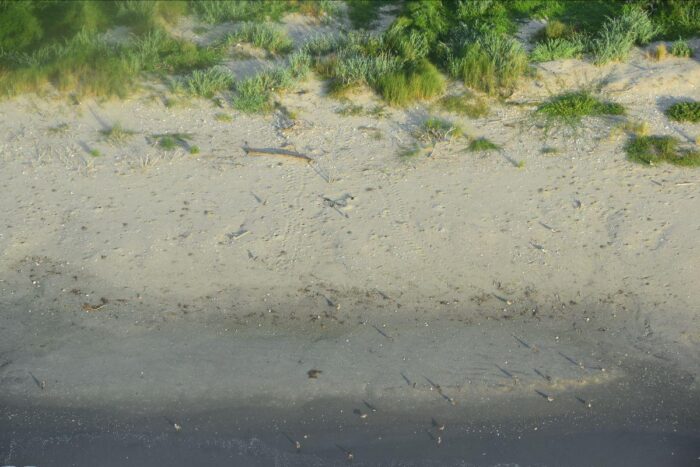
A picture of a Chandeleur island beach from above. (Photo from the CPRA)
In the month since Louisiana’s Coastal Protection and Restoration Authority released the fourth iteration of its “Comprehensive Master Plan for a Sustainable Coast,” I’ve been trying to understand what it means by “a sustainable coast” in this world of escalating climate risks.
If it’s only talking about the sinking deltas composing the bottom third of this state, then the sediment diversions and marsh creation projects certainly can provide sustainability for some of the plants, fish and terrestrial critters living here.
But that’s clearly not the idea behind this 50-year, $50 billion plan. Its charge is to allow its human communities to have a long-term future.
That goal, in fact, is spelled out this way in the plan’s first paragraph: “to implement restoration and risk reduction projects that will result in a vibrant and more sustainable coast for residents and visitors to enjoy.”
Yet if making human communities sustainable on this landscape is the goal, the plan lacks two essential chapters.
The first would outline the costs from risks that cannot be reduced by its projects.
For example, the plan boasts that its billions in floodwalls, levees and wetlands restoration can significantly reduce the cost of damages inflicted by higher storm surges and heavier rainfalls from the larger hurricanes already being caused by global warming.
But that figure only includes damages caused by floodwaters, not wind damage, the agency said. Studies show that billions in damage from hurricanes is caused by their winds, especially as they move more than 20 miles inland from the coast, where storm surge doesn’t reach. And that’s getting worse quickly: A report by NOAA calculated the $721 billion in hurricane damage over the five years ending 2021 was one-third the total of all storms over the previous 42 years.
That’s the reason many homeowners insurance policies in this area now carry deductibles of 5% for wind damage caused by hurricanes. Of course, that’s if the homeowner can even afford the soaring cost of insurance driven by the increasing rate of climate-related weather disasters.
It’s no surprise the governor has called in the Legislature to deal with this emergency. Not only could it destroy property values, but eventually it will prompt current businesses to relocate and new ones to stay away. That doesn’t look like a sustainable future for the human population on this landscape. But that risk isn’t mentioned in this plan.
The other new chapter should take the curtain off the major reason for the rising risk from hurricanes and flooding rains: The continued rise in greenhouse gases, primarily from fossil fuels.
Read the rest of the article at The Times-Picayune.