This Politician Is Driving Up Your Insurance and Hurting Your Property Values
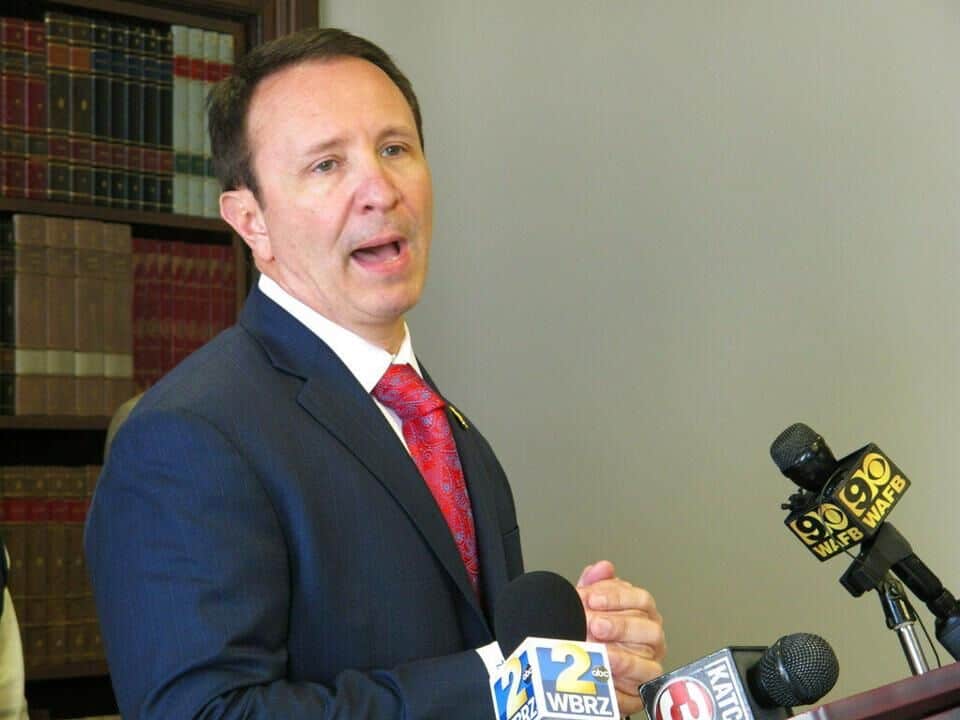
AG Jeff Landry. Photo by Melinda Deslatte / ASSOCIATED PRESS
What do you call people who hire employees to drive up their insurance rates, sink their property values and increase their risk of contracting terminal diseases?
Louisiana voters.
How else to explain the election of Jeff Landry as their attorney general?
While his citizen-bosses suffer the growing impacts of climate change — larger hurricanes, record rainfalls, soaring insurance rates — Landry is attacking regulations needed to protect them.
When parish governments sued oil and gas companies for the impacts of their wetlands-killing dredging and drilling activities, Landry opined, “As Louisiana’s chief legal officer, I have significant concerns that these junk suits could find a home here and have serious negative effects on our economy.”
When the world’s climatologists concluded climate change is real, the result of greenhouse gas emissions that were causing sea levels to rise at the fastest rates in 3,000 years, he called their work “a hoax.”
When Louisiana’s Coastal Protection and Restoration Authority, staffed by noted coastal scientists and engineers, determined those rising seas could swamp almost everything below U.S. 90 by 2067 unless emissions were quickly reduced, he said “Louisiana’s coastal problem has nothing to do with climate change.”
His latest war against his Louisiana employers is a lawsuit to remove the “social cost of carbon” from consideration in setting environmental regulations. This is a formula used to assess the long-term societal costs of those emissions from damages including sea level rise, severe weather events, income losses from industrial and agricultural failures and increased medical expenses.
Landry calls it “voodoo economics” and warned it was a move by those liberal feds to “takeover of all the industries in this country.”
Fortunately the U.S. Supreme Court has so far turned down the entreaties by Landry and other officials in GOP-led states to halt the use social cost of carbon
Landry’s skepticism would be news to noted conservatives Ronald Reagan and Antonin Scalia.
It was Reagan who introduced cost-benefit analysis into federal pollution regulations in 1981. By putting dollar values on what a regulation might cost industry compared with the higher expenses society incurs due to the pollution, an agency can determine if its benefits outweigh the costs.
Conservatives, concerned agencies might overstep their authority, liked the idea. In a 2015 Supreme Court case Scalia opined no regulation “is appropriate if it does significantly more harm than good.”
That’s why the administrations of presidents George W. Bush and Barack Obama used a standing interagency group to determine the social cost of carbon in rule-making.
Read the rest of the article at The Times-Picayune.