How a Glacier 7,000 Miles Away Could Impact the Future of Louisiana
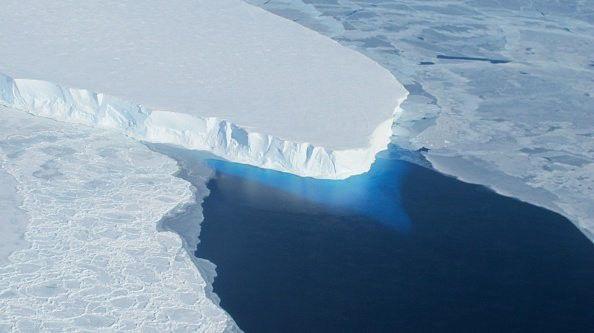
A new study by researchers at NASA and the University of California, Irvine, finds a rapidly melting section of the West Antarctic Ice Sheet appears to be in an irreversible state of decline. (Photo by VCG Wilson/Corbis via Getty Images)
As 2021 came to a close, Louisiana got very important information from a key location in its fight for coastal survival, information local news outlets paid scant attention to.
No, it didn’t come from Baton Rouge or Washington, D.C.
It came from more than 7,000 miles away at what is a lynchpin in Louisiana’s efforts to stay above the rising seas: Antarctica.
And, no, it wasn’t good news.
There’s growing evidence the Thwaites Glacier—at the size of Britain, the world’s largest—is in danger of sliding into the ocean much sooner than previously thought. That would not only raise sea levels fast enough to begin flooding coastal landscapes like Louisiana in the decades ahead, researchers say, but also lead to a domino effect resulting in unstoppable worldwide flooding that would last for centuries.
That worry comes after researchers discovered ocean currents warmed by climate change have been melting the bottom of the glacier’s miles-long ice sheet that extends from its land end out over the ocean.
The ice sheet acts as a buffer protecting the base of the glacier from the full effects of the warming ocean as well as a speed bump to slow its natural downward movement toward the sea. This new evidence showed the bottom-up erosion is creating huge fractures in the ice sheet which could cause it to break up and float away in 5 to 10 years.
“This would add as much as an inch each year to sea level rise in the decades ahead resulting in as much as an extra foot this century alone,” said Brent Goehring, a Tulane University researcher who is part of an international team studying the glacier.
“Obviously this should be a very serious concern here in New Orleans because we’re already having problems with current rates of sea level rise on the Louisiana coast.”
Antarctica has always been considered a key to our future in the age of global warming because of the vast amount of water it could dump into the oceans. Roughly the size of the U.S. and Mexico combined, it is covered in ice averaging 7,000 feet thick—about 70% of the planet’s total fresh water.
With the oceans already rising at rates faster than at any time in the last 2,800 years due to warming caused by greenhouse gas emissions, adding even a new inch could have devastating consequences for Louisiana’s effort to save some of its coastal zone. The Thwaites Glacier alone could add as much as two feet, studies show.
Read the rest of the article at The Times-Picayune.